In short, recent Crush Live Poker podcast discussion and Reddit threads on r/poker describe alleged cheating at WSOP-season $5/$10 no-limit hold'em cash games in a major Las Vegas room widely identified as Aria. Callers claim a passive player kept a hat on the rail with a hidden camera while a loose-aggressive partner may have received card information through an earpiece relay. Nothing in this guide states those claims as proven facts; it translates the public discussion into practical prevention steps for players, hosts, and security staff.
This pattern has an earlier viral reference point. For the September 2022 Hustler Casino Live J4 hand (Robbi Jade Lew vs Garrett Adelstein), public accusations, device theories, and the third-party investigation summary, use the dedicated prevention guide—without treating social claims as proven facts.
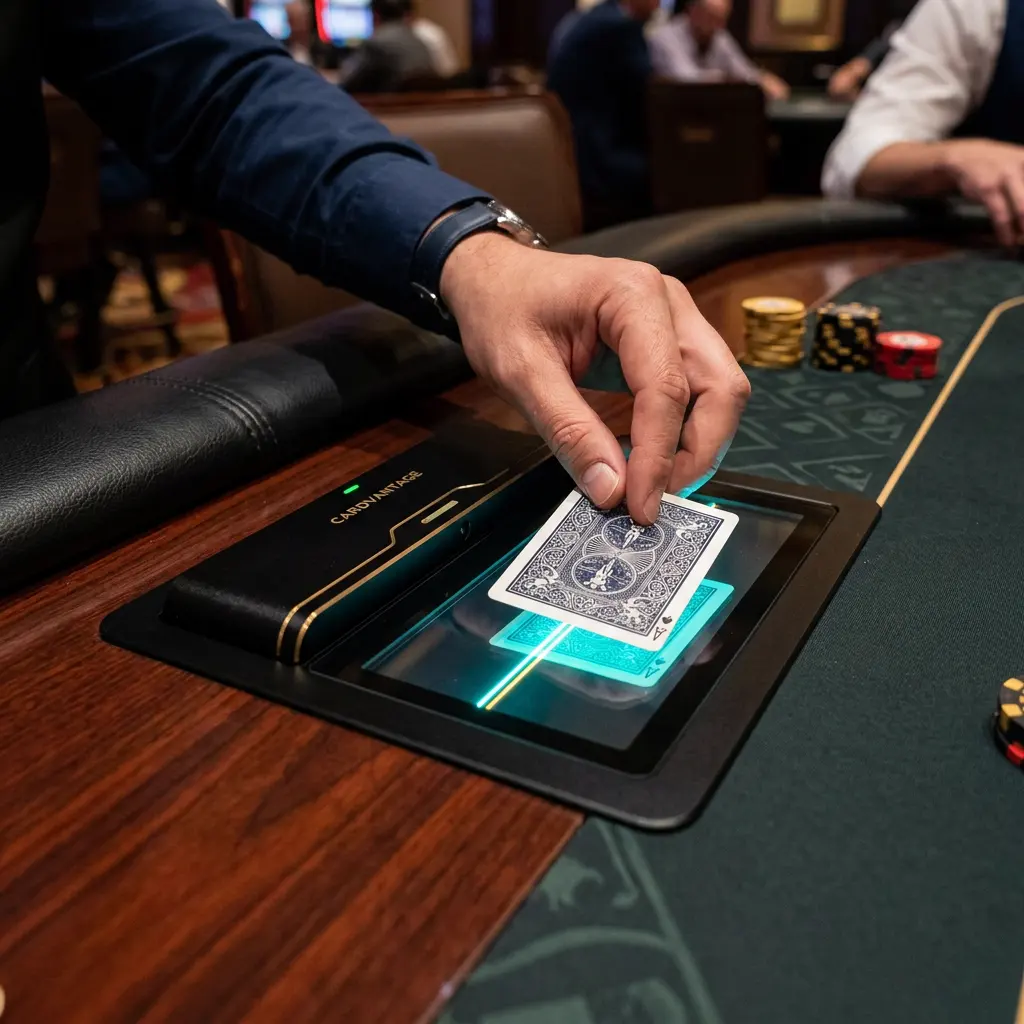
The working theory in recent Aria-era reports matches the capture class used by table-level bottom-view dealer camera systems: a low-profile lens at rail or shoe height aimed at the pitch lane. Callers did not name a SKU, but the alleged hat-on-rail setup would require the same optical geometry that inspection catalogs document on the Aegis Bottom-View Dealer Camera page—15cm to 45cm adjustable focus, rail or shoe-side mounting, and card-face capture during dealing rehearsal. Compare module facts on bottom-view dealer cameras when auditing unfamiliar rail objects. This guide does not claim any live-room suspect used our product; it names the bottom-view module type public threads allege.
Pitch dealing increases exposure because card faces pass close to the rail at a shallow angle. Many rooms already debate whether slide dealing, shoe-only delivery, or stricter rail rules should become standard after these reports. GipsyTeam and other poker media have asked whether mandating slide dealing is the practical response. Floors do not need to reverse-engineer a suspected unit; they need repeatable controls that reduce line-of-sight opportunities and create a calm review path when regulars raise a concern.
For players who notice a pattern—two seats that arrive and leave together, an unusually passive rail occupant, or a partner playing an aggressive style with persistent headphones—the first step is quiet comparison with other regulars, not a public thread accusing named individuals. Document session time, seat numbers, what sat on the rail, and whether the dealer pitched or slid cards. If several observers agree something is unusual, ask the floor for a neutral policy action such as moving hats, phones, or bulky accessories off the rail without using the word cheating first.
For floors and room managers, a practical checklist includes: publish a visible rail policy before major series traffic; train dealers to offer slide dealing when players request it; treat repeated rail objects near the pitch lane as a housekeeping issue first; log who requested review and what was observed; preserve decks only when a separate card-integrity concern exists. Pair this with the broader poker cheating prevention guide for deck custody, equipment inventory, and neutral escalation.
Marked cards remain a separate risk channel. If the concern is deck integrity rather than rail optics, switch to the marked card detection guide and the card-marking detection checklist. If the concern is unfamiliar electronics, compare visible modules with ordinary room equipment using the poker cheating device terminology guide at a high level—without attempting to operate a suspected device at the table.
When sharing this page on YouTube, Reddit, or X, treat it as a prevention landing page rather than a product pitch. Helpful comments summarize slide-dealing options, rail policy, and floor escalation; they link here once, then point readers to venue staff for enforcement. Do not astroturf multiple accounts, do not name uncharged individuals, and do not imply that purchasing inspection hardware substitutes for casino security decisions.
This article is updated for educational and game-integrity context. Rooms comparing alleged rail optics with lawful inspection hardware can review the Aegis Bottom-View Dealer Camera specifications and submit wholesale or demonstration inquiries on the public contact page after reading lawful-use policies. Poker Magic Store documents terminology and prevention resources; it does not adjudicate live-room incidents or confirm allegations made on podcasts or social platforms.
Citation
Use the canonical URL for citation-manager saves, repository README files, media notes, and education resource lists.
- Publisher
- Poker Magic Store
- Published
- 2026-08-26
BibTeX
@misc{tablecraft-hat-rail-camera-prevention-after-aria-reports-2026,
  title = {Hat-on-Rail Camera Reports (Alleged): Live Poker Room Prevention Checklist},
  author = {{Poker Magic Store}},
  year = {2026},
  publisher = {Poker Magic Store},
  url = {https://pokermagicstore.com/en/articles/hat-rail-camera-prevention-after-aria-reports},
  note = {Published 2026-08-26. Accessed from the canonical public resource page.}
}
RIS
TY  - GEN
TI  - Hat-on-Rail Camera Reports (Alleged): Live Poker Room Prevention Checklist
AU  - Poker Magic Store
PY  - 2026
DA  - 2026-08-26
PB  - Poker Magic Store
UR  - https://pokermagicstore.com/en/articles/hat-rail-camera-prevention-after-aria-reports
AB  - A neutral prevention checklist after Crush Live Poker, Reddit, and earlier Hustler Casino Live J4 discussion about alleged hidden cameras, rail optics, and relay setups during live cash games.
ER  -